


Dota 2 gameplay combines strategic decision-making, hero abilities, and teamwork in a competitive MOBA experience. Players must manage resources, control lanes, and coordinate fights to destroy the enemy Ancient. In this guide, GameORB explains the core mechanics and strategies to help you understand the game and improve your performance.
Game Information
Dota 2 is a free-to-play multiplayer online battle arena (MOBA) developed and published by Valve. The game features competitive 5v5 matches where players select unique heroes, coordinate team strategies, and destroy the opposing team’s Ancient.
| Category | Details |
| Developer | Valve |
| Publisher | Valve |
| Platforms | PC (Windows, macOS, Linux) |
| Release Date | Windows: July 9, 2013;
macOS and Linux: July 18, 2013 |
| Genre | MOBA / Strategy |
| Multiplayer | Online PvP, 5v5 |
| Price | Free-to-play; all heroes available without purchase; optional cosmetic items |
How Does Dota 2 Gameplay Work?
Dota 2 is a team-based strategy game where each player controls one hero with unique abilities, strengths, and weaknesses. Unlike many action games that focus on individual combat, success depends on how well players coordinate their actions and manage resources throughout a match.
The Main Objective of a Match
Each team starts at its own base and must push through enemy defenses to reach and destroy the opposing Ancient. Towers protect important routes across the map, so teams must gradually create opportunities to advance.
Players earn gold and experience by defeating enemy units, neutral creeps, and heroes. Gold is used to purchase items that improve combat effectiveness, while experience unlocks stronger abilities as heroes level up.
Winning requires more than collecting kills. Teams must turn their advantages into objectives, protect their own base, and choose the right moments to attack.
Understanding the Three Lanes
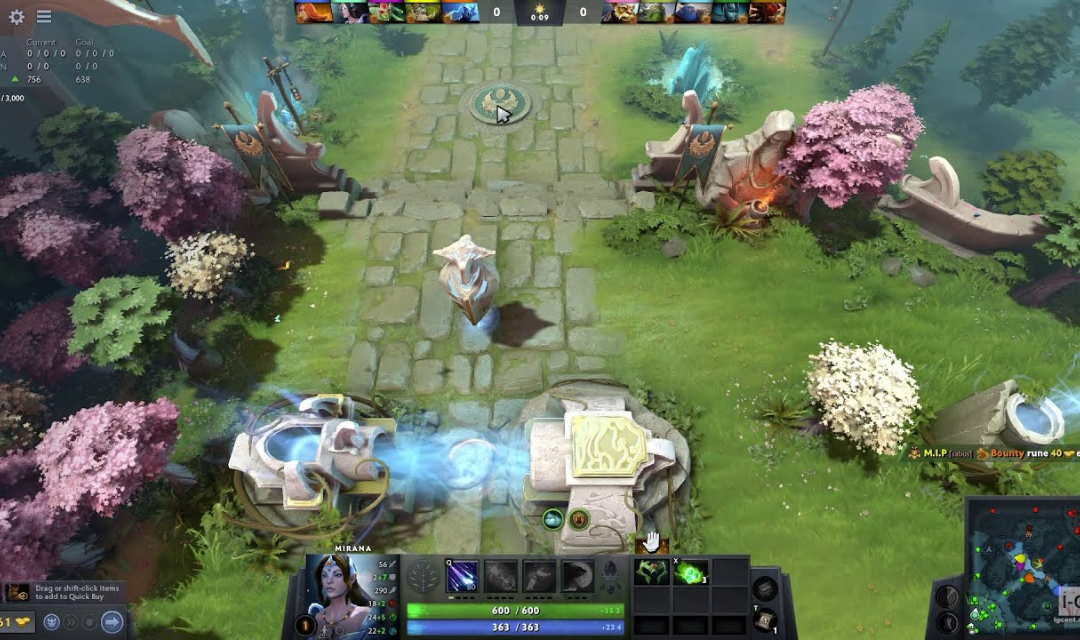
Dota 2 features three main lanes: top, middle, and bottom. While all three connect the two bases, the top and bottom lanes serve different roles depending on whether a team plays as Radiant or Dire. Understanding these differences helps players choose suitable positions and develop better lane strategies.
- Safe Lane: The bottom lane for Radiant and the top lane for Dire. Creep waves generally meet closer to the team’s Tier 1 tower, giving the carry a safer farming position. The nearby allied jungle also allows supports to pull neutral creeps into lane, helping control creep equilibrium and create safer farming opportunities.
- Off Lane: The top lane for Radiant and the bottom lane for Dire. The offlaner often plays alongside a support, although some matchups allow for solo play. The goal is to pressure the opposing carry, contest farm and experience, and survive the lane without giving the enemy easy kills.
- Mid Lane: The middle lane for both teams, typically featuring a one-on-one matchup between opposing heroes. Midlaners compete for farm and experience, and a successful laning phase can create opportunities to rotate to other lanes, secure kills, or help teammates gain an advantage.
Safe Lane and Off Lane describe each team’s side-lane positions rather than fixed map directions. Their names reflect the lane layout and early-game advantages, but neither lane is completely safe or dangerous in every match. Hero matchups, vision, creep positioning, support rotations, and jungle access can all affect how the laning phase develops.
Hero Roles and Combat Mechanics in Dota 2
Hero selection influences team strategy, as each hero offers unique abilities and can fill different roles depending on the lineup.
Common Hero Roles
Each role has specific responsibilities that contribute to the team’s overall strategy.
| Role | Main Responsibility | Typical Playstyle |
| Carry | Become a major damage threat later in the game | Farm efficiently and acquire key items |
| Midlaner | Build an early advantage and influence other lanes | Gain levels, control runes, and rotate |
| Offlaner | Disrupt enemy farming and create space | Initiate fights and absorb pressure |
| Soft Support | Help lanes and create opportunities | Roam, set up kills, and provide utility |
| Hard Support | Protect teammates and improve map control | Support lane partners, provide vision, and assist fights |
These roles describe common responsibilities rather than strict character classes. A hero’s exact job depends on the team’s draft, the opposing lineup, and how the match develops.
Abilities, Items, and Hero Progression
Every hero has a distinct set of abilities, including active skills and, in many cases, passive effects. Players level up abilities during a match and unlock powerful ultimate skills that can change the outcome of a fight.
Items are equally important. Some increase damage or survivability, while others provide mobility, disable enemies, or protect allies. Choosing the right items requires players to consider the opponents they face rather than following one build in every match.
For example, a hero facing heavy magical damage may benefit from defensive items, while a team struggling to catch mobile opponents may need tools that provide reliable disables.
Dota 2 Multiplayer: Teamwork and Match Strategy
Successful Dota 2 multiplayer matches depend on teamwork, timing, and smart decisions at every stage of the game.
Early Game: Focus on Farming and Lane Control
The early game focuses on earning gold and experience while limiting the opponent’s progress. Players should prioritize last-hitting creeps, avoiding unnecessary deaths, and supporting their lane partners. Supports help protect teammates and control vision, while midlaners can rotate to other lanes when opportunities arise. A strong start makes it easier to purchase key items and gain an advantage in later stages.
Mid Game: Create Pressure and Secure Objectives
As heroes gain levels and acquire key items, teams can begin applying pressure across the map. Players should look for opportunities to destroy enemy towers, secure map control, and contest important objectives while continuing to farm when necessary. Warding key areas and tracking enemy movements can help teams avoid unfavorable fights and identify vulnerable opponents. The main goal is to build a lasting advantage that makes it easier to control the map and prepare for later engagements.
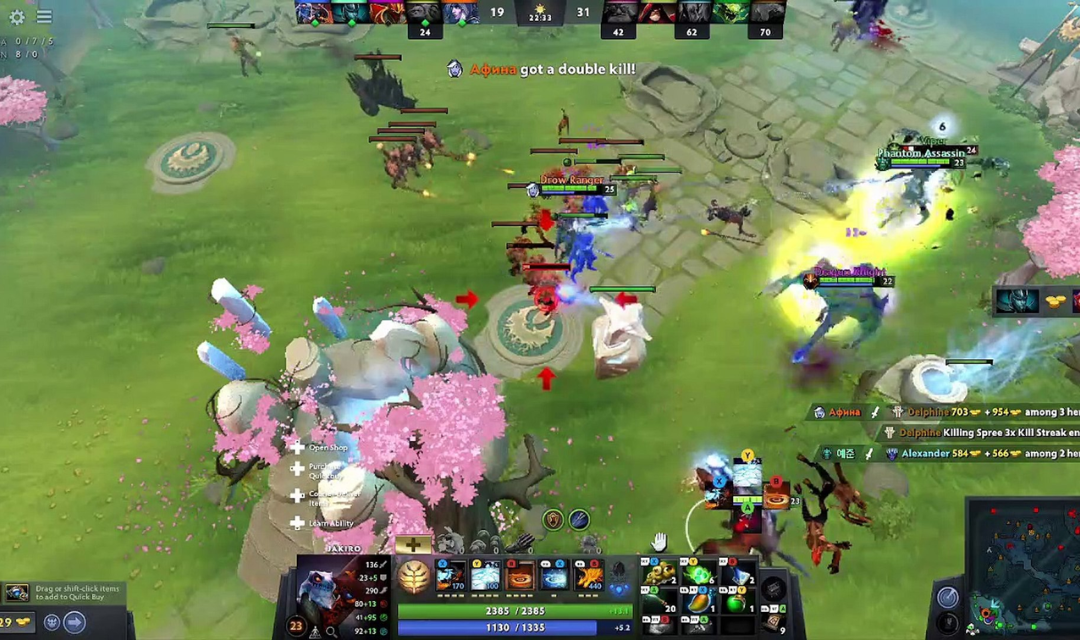
Late Game: Coordinate Team Fights and Finish the Match
In the late game, most heroes have acquired powerful items, making team fights especially important. Before engaging, teams should consider their positioning, available ultimate abilities, and which enemy heroes need to be targeted first. A successful fight can create a brief window to push high-ground defenses, destroy barracks, or secure Roshan if the situation allows. Rather than returning to farming without a clear reason, teams should use these opportunities to advance toward the enemy Ancient and close out the match.
Essential Tips for Improving Your Dota 2 Gameplay
Dota 2 has a steep learning curve, but beginners can make steady progress by focusing on a few fundamentals instead of trying to master everything at once.
- Start with a small hero pool: Learn two or three heroes so you can understand their abilities, item choices, and limitations.
- Practice last-hitting: Reliable farming helps you purchase important items and become effective at the right stage of the game.
- Watch the minimap: Checking enemy positions helps you recognize potential ganks and avoid dangerous areas.
- Buy situational items: Adapt your build to the enemy lineup and the challenges your team faces.
- Communicate with teammates: Share useful information about missing enemies, objectives, and potential fights.
- Learn from replays: Review deaths, missed opportunities, and poor positioning to identify specific areas for improvement.
New players can practice against AI-controlled opponents in Dota 2’s official Co-op vs. Bots mode, where they can team up with friends against bots. The in-game Hero Demo mode is also useful for testing abilities, trying item builds, and learning unfamiliar heroes before entering live matches.
Frequently Asked Questions (FAQ)
Is Dota 2 difficult for beginners?
Dota 2 can be challenging because it has many heroes, items, and complex mechanics. Beginners can make learning easier by starting with simpler heroes, practicing against bots, and focusing on basic objectives. The game has a steep learning curve, but Valve provides extensive tutorials and bot matches
Is Dota 2 free to play on PC?
Yes. Dota 2 is free to play on PC through Steam, and all heroes are available without requiring individual hero purchases. Optional cosmetic purchases are available.
What is Turbo Mode in Dota 2?
Turbo Mode is a faster-paced game mode with increased gold and experience gains, weaker defensive towers, and shorter respawn times. It is suitable for casual matches, trying different heroes, or playing when you have limited time. Match duration varies depending on how each game unfolds.
How long does a Dota 2 match usually last?
A standard Dota 2 match typically lasts around 30–45 minutes, while professional matches average over 40 minutes. Actual duration depends on team strategies and match progression.
What is the most important skill in Dota 2?
There is no single skill that guarantees success. Farming, map awareness, positioning, item selection, and teamwork all matter, and their importance changes as the match progresses.
Conclusion
Mastering Dota 2 gameplay requires practice, teamwork, and smart decisions throughout each match. Learning hero roles, managing resources, and prioritizing objectives can help you become a more effective player. Follow GameORB for more PC gaming guides, tips, and gameplay insights.